 There can be many reasons why your home’s foundation may need to be strengthened, including:
* The foundation has shifted or moved due to earthquakes
* Soil has eroded beneath or around the foundation, causing cracks, sloping or sinking
* You want to add a second story to the existing structure, which will exceed the amount of weight the building and foundation can support
* The foundation has decayed over time
* There has been a change in how the structure is being used
* The soil was poorly compacted when the home was built
* Weak and poor quality materials were used when the home was built
* A basement has been added to the structure
* A new building has been constructed near the home with a deeper foundation
* The foundation has settled due to poor soil conditions or a lowered water table
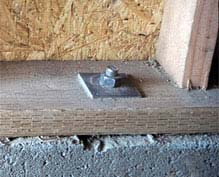
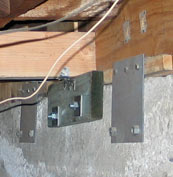
In Los Angeles, homes that were constructed before 1940 were not bolted to their foundations. During an earthquake, these structures can be easily shaken off their foundation. Many homes that were built after 1940 used weak materials on cripple walls. A cripple wall is the wall that surrounds the crawl space under a house and connects the home to the foundation.
If you live in an older home, bolting the house to your foundation is critical for earthquake preparedness. The bolts should be placed every 4 to 6 feet and more than one foot away from every joint. For homes that are built on a hill, make sure you also bolt the wood that is “stepping down” on the grade.
Underpinning can also increase the strength and stability of your foundation. The process involves either extending the foundation in depth or breadth so it rests on stronger soil or distributes its load across a broader area.
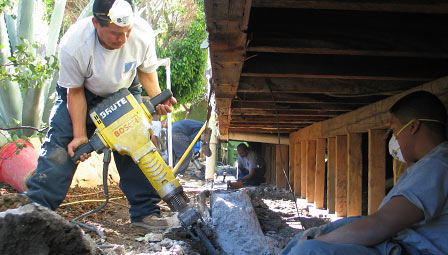
Using concrete foundation repair is one of the primary methods used for underpinning. Sections beneath or around the home are excavated and then filled by the concrete. The concrete is usually mixed with aggregates. Once the concrete is poured, it will typically take 2 days to set.
Other ways of underpinning involves the use of screw piles, brackets and beams. Sometimes the soil can be strengthened by adding grout.
The strength of cripple walls can be increased with plywood. How do you know if your cripple wall needs strengthening? If the exterior of your cripple wall is made of wood siding or stucco, it will need to be strengthened with plywood. The plywood should be nailed to the walls on every side of the house.
In addition to stabilizing a home and preventing future damage, strengthening a foundation will make the structure much safer to live in, as well as easier to insure and sell.
When a home is showing any signs of foundation settlement or damage, seek a local foundation inspection (Los Angeles area for example) from a licensed foundation repair Los Angeles professional. A local foundation expert can tell you what is causing the problem and how it should be corrected. This may include strengthening your home’s foundation to prevent any further damage and reduce the chances of your home sliding off the foundation or collapsing during an earthquake or even house leveling (Los Angeles).

 LOS ANGELES, CA: Julian Construction, (
 LOS ANGELES, CA: Julian Construction, Inc., (
 LOS ANGELES, CA: Julian Construction, Inc., (
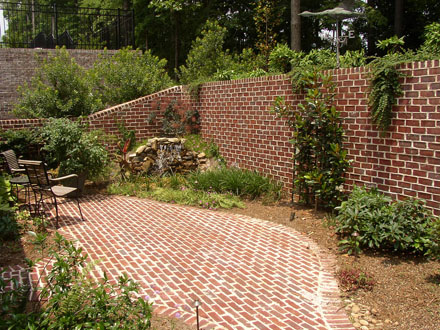 A retaining wall is a stabilizing structure used when soil on a slope threatens to spill and cause soil erosion, ruining the landscape or causing other problems with the home’s foundation. A retaining wall holds back the falling soil and redistributes the pressure of the sloping ground. Many different materials are used for a wall, such as concrete, steel, stone, brick, composites, wood and even glass.
 LOS ANGELES, CA:
 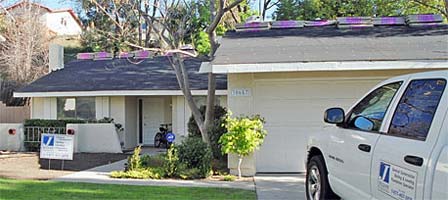 Keeping your roof in good repair is an important home maintenance task. A damaged roof can result in leaks that cause interior damage to your walls and cause the need for foundation repair. Signs of roof damage can include a sagging roof, cracking paint, wet spots, wet insulation and light shining through the roof. A damaged roof needs to be repaired quickly to prevent further damage and increased repair costs.
 Soil is made up of sand, silt and clay, along with organic materials. Soil types are determined by the mixture of these elements. For example, expansive soil, also called clay soil, has a higher concentration of clay particles than any other type of soil, while sandy soil has more sand particles. Sand particles are also large, while clay particles are extremely small. The clay particles also stick together, which prevents air from passing through the soil and causes any water that accumulates in the soil to drain more slowly.